
How To Become A Professional Makeup Artist In Hyderabad
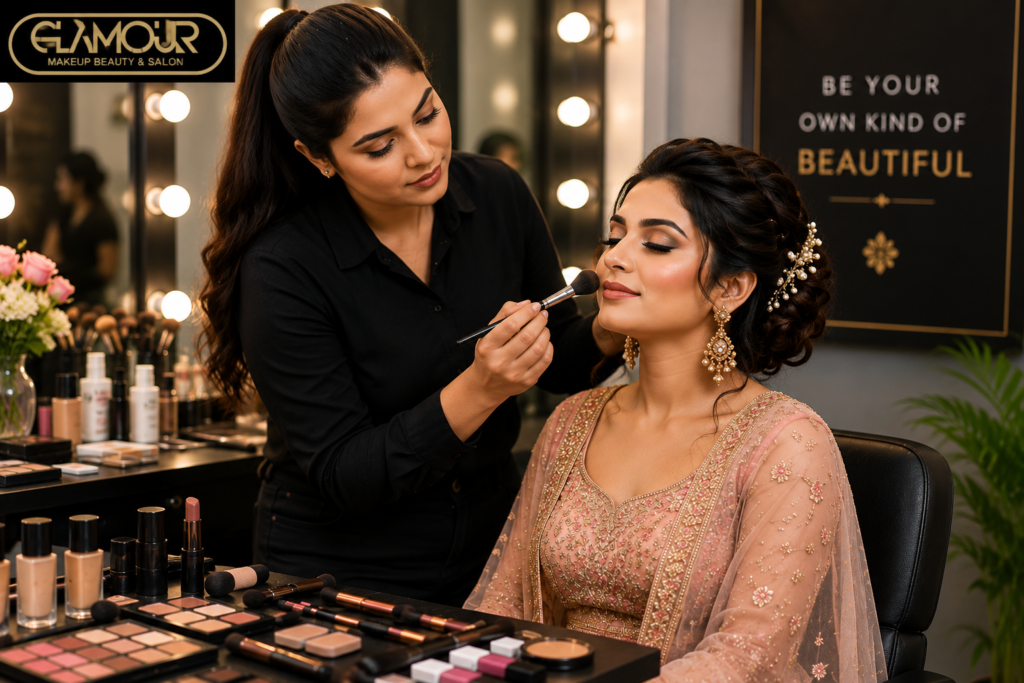
Becoming a makeup artist is not simply about learning how to apply foundation, eyeshadow, lipstick, or contour. Professional makeup work requires technique, practice, product knowledge, creativity, client communication, and the ability to create a suitable look according to different occasions and individual preferences.
If you are wondering how to become a professional makeup artist in Hyderabad, the first step is to understand what the profession actually involves and what skills you need to develop before working with clients.
Hyderabad has a growing beauty and bridal industry, creating opportunities for trained makeup professionals across salons, studios, bridal services, freelance work, events, fashion, and personal beauty services. However, completing a course alone does not automatically make someone a successful artist. Practical experience, consistency, portfolio development, and professional behaviour also play an important role.
The good news is that you do not have to learn everything at once. You can start with the fundamentals, practise regularly, choose suitable training, develop your own working style, and gradually move towards specialised services.
This guide explains how to become a professional makeup artist in Hyderabad step by step so you can make a clearer decision about your training and career path.
What Does A Professional Makeup Artist Actually Do?
A professional makeup artist works with different clients, occasions, face shapes, skin types, preferences, and makeup requirements.
The work can include much more than applying makeup products.
A professional may need to:
- Understand what the client wants
- Discuss the occasion and desired appearance
- Prepare the skin before makeup
- Select suitable products
- Match and blend the base correctly
- Create balanced eye makeup
- Work according to face shape
- Adjust the intensity of the look
- Maintain hygiene during the service
- Manage time according to appointments
- Make corrections when necessary
- Complete the look neatly
- Communicate professionally with the client
This is why proper training can make a significant difference when starting a makeup career.
Step 1: Understand Whether Makeup Is The Right Career For You
Before investing time and money into training, think about whether you genuinely enjoy working with makeup and people.
Professional makeup work can involve long hours, repeated practice, standing for extended periods, early appointments, wedding schedules, and working with clients who have very specific expectations.
You should enjoy:
- Learning new makeup techniques
- Practising repeatedly
- Working with different faces
- Understanding colours and textures
- Creating different looks
- Working with people
- Paying attention to small details
- Improving your skills continuously
If you enjoy these aspects, makeup artistry can become a rewarding career direction.
Step 2: Choose The Right Makeup Training
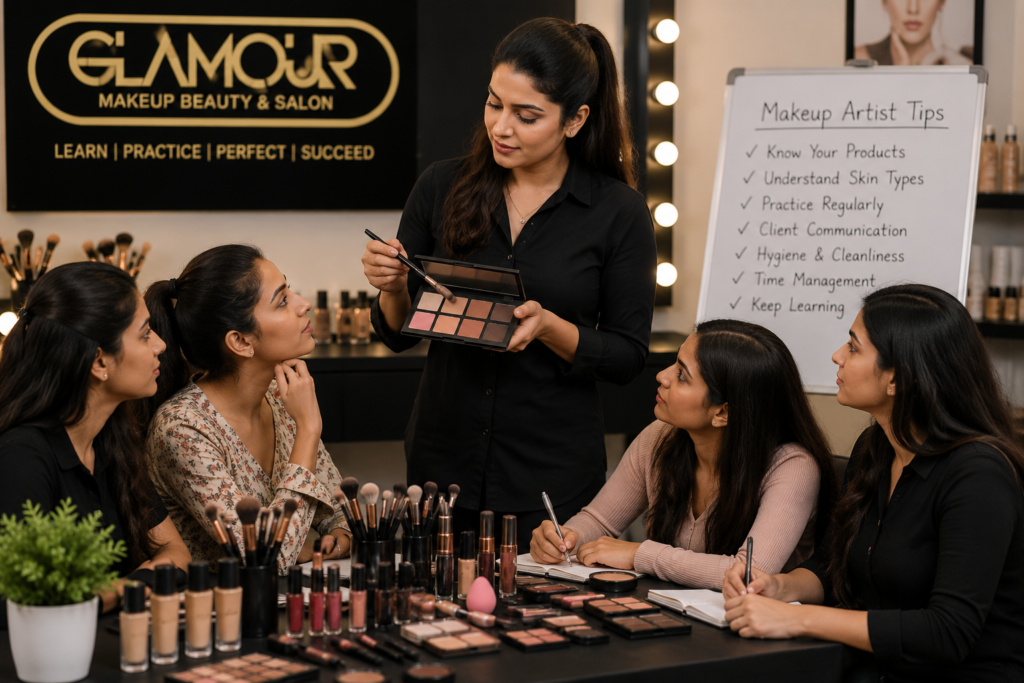
One of the most important decisions is selecting suitable training.
Beginners should not choose a course simply because it has a long list of techniques. Instead, look at whether the training gives you enough practical exposure and whether the teaching approach suits your current skill level.
For someone completely new to makeup, a Beginner Makeup Course In Hyderabad can provide a foundation before moving into more specialised areas.
You can also explore a Makeup Certification Course In Hyderabad if certification is important for your career plans.
Students who want to understand the difference between basic learning and career-focused training can also consider a Certified Makeup Artist Course In Hyderabad.
The right course should help you understand the technique behind the look rather than asking you to simply copy a demonstration.
Step 3: Learn The Fundamentals Properly
Professional makeup starts with strong fundamentals.
Before trying highly detailed bridal or editorial looks, you should become comfortable with the basic steps.
These include:
Skin Preparation:
Understanding how to prepare the skin before applying makeup.
Base Application:
Learning how to apply foundation and concealer smoothly without creating an uneven appearance.
Colour Correction:
Understanding when colour correction may be useful and how it affects the overall base.
Face Definition:
Learning the fundamentals of contouring, highlighting, and blush placement.
Eye Makeup:
Developing control over eyeshadow placement, blending, eyeliner, and other eye techniques.
Lip Application:
Learning how to create clean and balanced lip shapes.
Finishing:
Understanding setting, final checks, and small corrections before completing the look.
These may appear simple, but mastering them takes consistent practice.
Step 4: Practise On Different Faces
One of the biggest mistakes beginners make is practising only on themselves.
Your own face gives you familiarity, but professional makeup artists need to work with different features.
Practise on:
- Different face shapes
- Different skin textures
- Different skin tones
- Different eye shapes
- Different lip shapes
- Different age groups
- Different makeup preferences
Working on different faces teaches you how to adjust your technique instead of following one fixed method every time.
This is an important part of learning how to become a professional makeup artist in Hyderabad, because real clients will rarely have exactly the same features as your practice model.
Step 5: Develop Product Knowledge
A professional makeup artist does not necessarily need hundreds of products.
What matters more is understanding the products you use.
You should gradually learn about:
- Foundation types
- Concealers
- Primers
- Setting products
- Blushes
- Bronzers
- Highlighters
- Eyeshadows
- Eyeliners
- Mascaras
- Lip products
- Makeup tools
- Brushes
- Sponges
- Skin preparation products
Learn why a particular product is suitable for a certain requirement instead of selecting products only because they are popular.
Good product knowledge can also help you avoid unnecessary spending when building your professional kit.
Step 6: Learn Different Makeup Styles
Once your fundamentals become stronger, start exploring different makeup styles.
Natural Makeup:
Soft and subtle makeup that enhances the person’s existing features without looking overly heavy.
Party Makeup:
A more defined look suitable for celebrations and social events.
Glam Makeup:
More detailed makeup involving stronger eye definition, complexion work, and overall finishing.
Bridal Makeup:
Bridal work requires careful preparation, long-lasting techniques, attention to detail, and an understanding of the bride’s preferences and event requirements.
If bridal makeup interests you, you can explore a dedicated Bridal Makeup Course In Hyderabad after building your fundamentals.
HD Makeup:
HD makeup involves techniques designed to create a refined finish suitable for photography and high-resolution environments.
Self Makeup:
Self-makeup training is useful for personal learning, but professional makeup artistry requires a broader skill set because you need to work on other people.
Step 7: Learn Bridal Makeup If You Want A High-Value Specialisation
Bridal makeup is one of the areas many aspiring makeup artists consider when planning their careers.
However, bridal work should not be treated as simply “heavier makeup.”
A bridal makeup artist needs to understand:
- Long-duration makeup
- Skin preparation
- Photography requirements
- Outfit and jewellery coordination
- Client preferences
- Makeup trials
- Time management
- Touch-up requirements
- Different lighting conditions
- Event schedules
If you want to specialise in bridal services, dedicated Bridal Makeup Artist Near Mehdipatnam and other location-based bridal training resources can also help you understand the type of specialised services available in Hyderabad.
The important point is to develop your foundation first and then build bridal expertise through focused practice.
Step 8: Build A Professional Makeup Kit Gradually
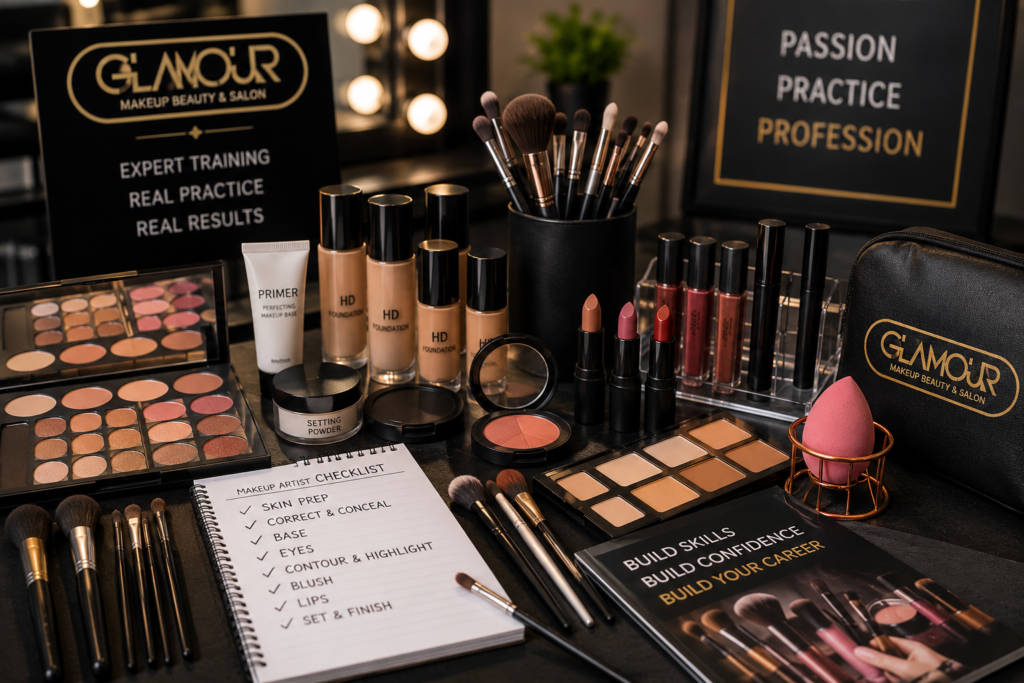
You do not need to purchase every makeup product available in the market when you are starting.
Begin with products and tools that you actually understand and can use confidently.
Your professional kit can gradually include:
- Base products
- Concealers
- Powders
- Blush
- Contour products
- Highlighters
- Eyeshadow palettes
- Eyeliners
- Mascaras
- Lip products
- Makeup brushes
- Sponges
- Disposable applicators
- Skin preparation products
- Hygiene supplies
As your experience grows, you will understand which products are genuinely useful for your work.
Step 9: Take Hygiene Seriously
Professional makeup involves direct contact with clients, so hygiene cannot be treated as an optional extra.
Develop good habits from the beginning.
Always pay attention to:
- Clean brushes
- Clean tools
- Sanitised work surfaces
- Disposable applicators where appropriate
- Clean hands
- Product hygiene
- Proper storage
- Organised makeup kit
A professional-looking kit is not only about how expensive the products are. It should also reflect cleanliness and responsible working practices.
Step 10: Learn Client Communication
A technically skilled makeup artist can still struggle professionally if communication is poor.
Before beginning a service, understand:
- What the client wants
- Where they are going
- What type of event they are attending
- Their preferred makeup intensity
- Any specific concerns
- Their outfit and overall styling
- Their comfort level
Do not assume that every client wants the same makeup style.
Professional communication helps you understand the person sitting in front of you rather than simply creating the look you personally prefer.
Step 11: Build Your Makeup Portfolio
Once you start practising, document your work.
A portfolio allows potential clients to understand your style and level of work before booking you.
Take clear photographs of:
- Natural looks
- Party looks
- Bridal looks
- Eye makeup
- Different skin tones
- Different face shapes
- Before-and-after transformations
Try to keep your photographs clean and realistic.
Your portfolio should represent the quality of work you can consistently deliver—not only your best result from dozens of attempts.
Step 12: Get Practical Experience
Training gives you a foundation, but experience teaches you how to work under real conditions.
Start by practising with friends, relatives, classmates, or models where appropriate.
As your confidence increases, you can gradually work towards paid services.
During this stage, pay attention to:
- How long each look takes
- Which techniques take more time
- Which products work reliably
- How clients communicate their preferences
- How you handle corrections
- How you organise your kit
- How you manage appointments
This practical experience is one of the most important parts of learning how to become a professional makeup artist in Hyderabad.
Step 13: Choose Your Career Direction
Makeup artistry can lead in different directions.
You do not have to follow exactly the same career path as another artist.
You may choose to work as:
Freelance Makeup Artist:
Work independently and accept appointments for different types of makeup services.
Bridal Makeup Artist:
Specialise in wedding and bridal beauty services.
Salon Makeup Professional:
Work as part of a salon or beauty studio team.
Makeup Studio Professional:
Work in a dedicated makeup environment and develop a specialised client base.
Event Makeup Artist:
Provide makeup services for parties, celebrations, shoots, and other events.
Beauty Educator:
After developing sufficient professional experience and expertise, experienced artists may explore teaching and training.
Step 14: Continue Learning
The beauty industry keeps changing.
New products, techniques, trends, tools, and client preferences appear regularly.
A professional artist should therefore continue learning even after completing a course.
You can improve through:
- Advanced training
- Workshops
- Practice sessions
- Professional demonstrations
- Industry events
- New technique research
- Portfolio development
- Learning from experienced artists
If you want structured learning beyond the beginner level, a Diploma In Makeup Artistry Hyderabad can be another option to explore depending on your career goals.
How Long Does It Take To Become A Professional Makeup Artist?
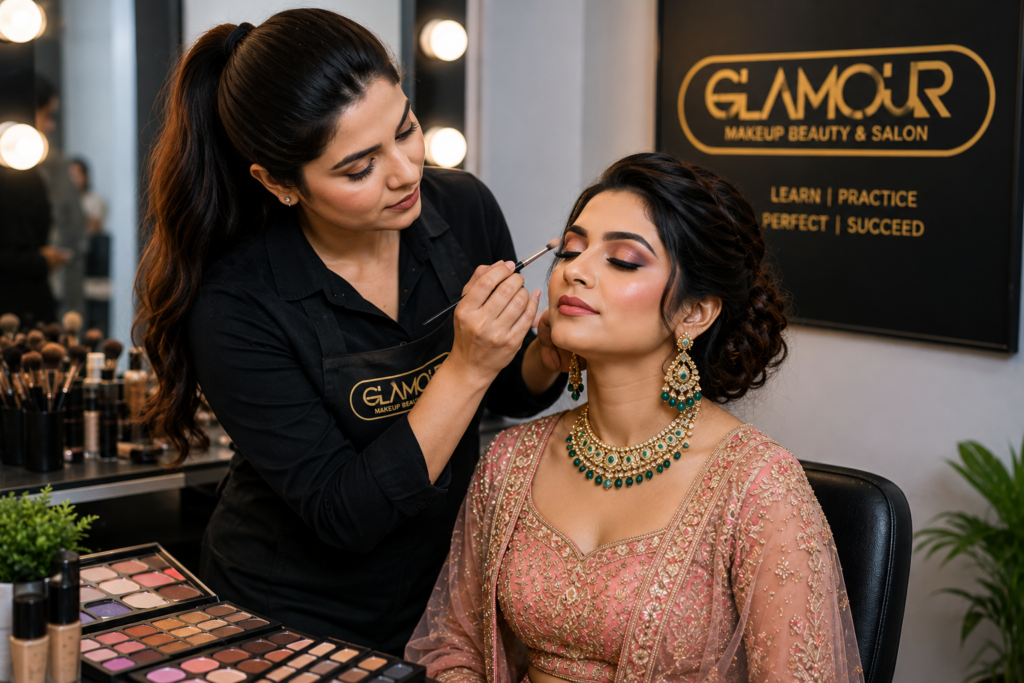
There is no single timeline that applies to everyone.
Your progress depends on:
- The type of training you choose
- How frequently you practise
- Your starting skill level
- The number of people you practise on
- Your ability to understand corrections
- Your consistency
- The specialisation you choose
You can learn basic techniques relatively quickly, but becoming confident enough to work consistently with different clients takes much more practice.
Instead of asking only how many days a course lasts, consider how much practical learning and practice you will actually receive.
Is Certification Necessary?
Certification can be useful because it provides formal evidence that you completed a particular training program.
However, certification alone does not determine the quality of a makeup artist.
Clients are also interested in:
- Your portfolio
- Your makeup style
- Your experience
- Your professionalism
- Your communication
- Your consistency
- Reviews and recommendations
Therefore, the strongest approach is to combine suitable training with practical experience and a strong portfolio.
What Can A Makeup Artist Earn In Hyderabad?
Income can vary significantly depending on experience, specialisation, client base, location, pricing, event type, and the number of bookings.
A beginner may start with smaller services while building experience and a portfolio.
With time, an artist may increase their rates as their skills, reputation, demand, and specialisation develop.
Bridal makeup, specialised occasion makeup, freelance services, and premium client segments can have different pricing structures.
Rather than focusing only on an expected salary, aspiring artists should concentrate on developing skills and building a reputation that can support sustainable growth.
Can You Become A Makeup Artist After 10th Or 12th?
Yes, students can begin exploring makeup training after completing their school education, depending on the admission requirements of the specific academy or course.
There is no need to wait until you have completed a traditional degree to start developing practical makeup skills.
Students can begin with foundational training and gradually move towards specialised courses.
Those who are already pursuing graduation can also learn makeup alongside their studies if their schedule permits.
The important thing is to select a course appropriate for your current level and career plans.
Where Can You Learn Professional Makeup In Hyderabad?
When comparing training options, do not select an academy only because of its location or course title.
Look at factors such as:
- Practical training
- Trainer guidance
- Course structure
- Techniques covered
- Practice opportunities
- Hygiene practices
- Student support
- Certification details
- Portfolio opportunities
If you are specifically looking for a structured academy environment, you can explore Makeup Academy In Gudimalkapur, Makeup Academy In Rethibowli, Makeup Academy Near Mehdipatnam, and Makeup Academy Near Attapur based on the location that is convenient for you.
For students interested in nearby areas, location-specific training pages can help you compare available learning options.
What About Hair And Other Beauty Skills?
A makeup artist does not necessarily need to become an expert in every beauty category.
However, understanding related services can make your overall professional profile more versatile.
For example, basic hairstyling knowledge can be useful when providing complete bridal or occasion looks.
You can explore Professional Hair Styling Course In Hyderabad if you want to develop dedicated hairstyling skills.
Similarly, learners interested in broader beauty training can explore Makeup And Beautician Course In Hyderabad to understand how makeup and beautician skills can be developed together.
Students interested in skincare can also consider Skin Care Course In Hyderabad, while facial service training is available through a dedicated Facial Course In Hyderabad.
Career Opportunities For Makeup Artists In Hyderabad
Once you develop sufficient skills and experience, several career directions may become available.
Bridal Makeup: Work with brides and wedding parties.
Freelance Makeup: Accept appointments independently based on your services and availability.
Salon Employment: Work within an established salon or beauty studio.
Event Makeup: Provide makeup for parties, celebrations, functions, and special events.
Fashion And Photography: With the appropriate portfolio and network, artists may explore shoots and fashion-related assignments.
Makeup Education: Experienced professionals may eventually move into teaching and mentoring.
Your opportunities will depend on your skill level, portfolio, networking, professionalism, and the type of makeup services you choose to specialise in.
Common Mistakes New Makeup Artists Should Avoid
Buying Too Many Products Too Early: A large kit does not automatically mean better makeup. Learn your products before continuously adding new ones.
Copying Every Trend: Not every trend suits every face or client. Learn the fundamentals first.
Ignoring Skin Preparation: The final makeup result can be affected by how the skin is prepared.
Practising Only On Yourself: Professional artists need experience with different faces and features.
Underestimating Hygiene: Clean tools and responsible product handling should be part of your routine from the beginning.
Not Building A Portfolio: Potential clients need to see your work before deciding to book you.
Stopping After One Course: A course provides a foundation. Continuous practice and learning are essential for long-term growth.
A Simple Roadmap To Becoming A Makeup Artist
If you want a straightforward path, you can follow this progression:
1. Learn the fundamentals
Understand skin preparation, base, eyes, lips, blending, and finishing.
2. Join suitable professional training
Choose a course that provides practical learning and guidance.
3. Practise regularly
Work on different faces and gradually improve your speed and precision.
4. Explore specialised looks
Move into bridal, party, HD, or other makeup styles according to your interests.
5. Build your portfolio
Document your best and most consistent work.
6. Start gaining experience
Work with models, friends, family, or clients as your confidence grows.
7. Develop your professional identity
Create a clear makeup style, service structure, and portfolio.
8. Continue learning
Keep improving your techniques and adapting to industry changes.
This step-by-step approach is far more practical than expecting to become an expert immediately after completing a course.
Final Thoughts:
If you are serious about learning how to become a professional makeup artist in Hyderabad, focus on building a combination of technical skills, practical experience, professional habits, and client confidence.
Start with the basics instead of rushing into advanced techniques. Choose training that gives you meaningful practical exposure. Practise on different faces, learn how to work with different skin types and features, maintain proper hygiene, and gradually build a portfolio that genuinely represents your abilities.
Your first course is only the beginning.
With consistent practice, continued learning, good client communication, and a professional approach, you can gradually develop your skills and explore opportunities in bridal makeup, salons, freelance services, events, and other areas of the beauty industry.
If makeup is something you genuinely enjoy, start learning, keep practising, and allow your skills to grow step by step.